This one costs money.
Rerun + AI rewrites the requirements↔tests matrix and the per-test catalogue by asking a model — about $5–$10 on Sonnet — and then re-derives the evidence and rebuilds the page. The matrix you are looking at is replaced, not confirmed: a second pass over the same diff words and ranks it differently. The copy being replaced is kept in .human-review/.model-prev/.
Plain Rerun does everything except the model half, and costs nothing.
Review
6 open review issues · 3 auto-fixed · 7 implementation assumptions
12 commits, 324 lines changed since the agent finished. Everything else on this tab — and on every other tab — describes the branch as it was when the review was written.
Reviewed at ce56d912. 32 generated files moved as well and are not counted here.
7cad86b1test(visits): click the vet through the browser, not just past the API 2026-09-1831297ed4chore(codecity): commit the regenerated city the guardrail asks for 2026-09-1821680c35Record the sequence diagrams of the vet-linking tests 2026-09-180bb6f069test: Gherkin UI scenario for the vet-linking story 2026-09-189ce98ab9Log the booked visit id and the attending vet 2026-09-186aac04b4Drop the tests that proved clearing the vet persists, to show an unproven requirement 2026-09-18abf1c951Give VisitTest a server to post the fake SMS to 2026-09-18e9e23b6aRecord the sequence diagrams with the SMS gateway self-call 2026-09-180a3541e5VisitTest goes back to a plain @SpringBootTest, with no server to post to 2026-09-197ea4affdRedraw the sequences without the empty JDBC arrows 2026-09-19f2b2dae7Rate the assumptions: how sure the author was of each reading 2026-09-19226755c3Use a raw <select> for the vet on the edit form, on purpose, so the design-system audit has a gap to show 2026-09-19
8 tooling commits merged from main
753f724cLet the review run start the stack its film is recorded against 2026-09-17f96259dcRequire one Gherkin scenario through the UI per feature 2026-09-18619902c3pre-commit: spotless only on the staged files 2026-09-182f5947eaRevert "Require one Gherkin scenario through the UI per feature" 2026-09-184aea32fcSend the fake SMS over HTTP, so the trace crosses a real socket 2026-09-18b0203286human-review: let the design-system audit start its own two builds 2026-09-19d0d57219Send the fake SMS in-process again: keep the test instrumentation out of production code 2026-09-19c4b0df32genseq: drop JDBC spans that carry no statement 2026-09-19
Open review issues
Findings the agent read and said no to, with its reason. These are closed decisions, not a queue: your job here is to agree or disagree, and the last three were raised by the agent against itself rather than by a pass.
- worth a look/code-review (the same finding, its design half) Make PUT /api/visits/{id} keep the vet when the body omits vetId
The endpoint already replaces
dateanddescriptionunconditionally — a body withoutdatenulls the date. Special-casingvetIdwould make one field in one DTO behave differently from its neighbours, and telling absent from explicit-null needs aJsonNullablewrapper that nothing else in this codebase uses. The ticket's second requirement is that clearing the field sticks; unconditional assignment is what makes it stick."assign only when the field is present" is precisely the bug #37 tells me not to repeat.
+88currentVisit.setVet(attendingVet(visitDto.getVetId())); - nit/code-review (duplication) Collapse the duplicated attendingVet helper
I first wrote it as one
defaultmethod onVetRepository, which is where it belongs. It fails at runtime: Spring Data'sNullnessMethodInvocationValidatorrejects a null argument to any repository method, so "no vet chosen" became a 500 — and neitherorg.springframework.lang.@Nullablenororg.jspecify.@Nullableon the parameter talks it out of that. A@Componentwrapping one ternary would buy less than it costs.three lines shared by two controllers that already duplicate the whole booking flow; the honest fix is collapsing those, which is a bigger change than #37 asks for.
+201log.debug("Attending vet: {}", vet.getLastName()); - worth a lookme, while writing the test for the vet-picker fix A denied @PreAuthorize answers 500 instead of 403
handleGeneralExceptioncatchesException, which includesAuthorizationDeniedException, so every authorization failure inrest/is reported as an internal error — and theProblemDetailechoes the exception's own message back to the caller. Worth its own ticket.ownerAdmin_cannotAddAVettherefore asserts the write is refused rather than pinning the status code, so fixing this will not fail it.it is global error handling on every endpoint, and #37 is about a column on visits.
75public ResponseEntity<ProblemDetail> handleGeneralException(Exception e, HttpServletRequest request) { 76 log.error("An unexpected error occurred: {}", e.getMessage(), e); 77 ProblemDetail pd = buildProblemDetail(e.getMessage(), 78 e.getMessage(), 79 HttpStatus.INTERNAL_SERVER_ERROR, request); 80 return ResponseEntity.status(HttpStatus.INTERNAL_SERVER_ERROR).body(pd); 81} - nitme, reading the repo before starting The generated sequence diagram for booking with a vet is orphaned
This file predates my commit (it arrived with
0d534233and survived the revert of the earlier attempt at #37). It deep-links toadd-visit.spec.ts:52andOwnerRestController.bookVisit:193, neither of which exists, and describes aVetRepository.getByIdOrNullI deliberately did not build. It is stale either way; my change does not make it staler, and I did not add the e2e test it claims to picture.regenerating it needs the whole stack traced — browser, backend, Tempo — and the frontend's dependencies are not installable here.
59activate Backend - nitme, anticipating SonarCloud java:S107 (this repo lowers the cap to 5) OwnerRestController's constructor is now nine parameters
Resolving the vet needs a repository, and
mapper → repositoryis forbidden bydocs/packages.puml. Sonar will re-flag S107 because the constructor's lines changed, so this will show up as a new-code finding on a pre-existing violation.it was already eight, the ninth collaborator is genuinely needed, and every alternative is worse.
67 - nitme The user manual still describes the visit screens without a vet
manual.mdand its screenshots are regenerated by crawling the running UI, which needs the frontend's dependencies installed; hand-editing the prose would leave it disagreeing with its own screenshots.100To add a visit, open the owner's record (see [Owners](#owners)), find the pet that came in for the visit, and click *Add Visit* in that pet's section. The *New Visit* form opens with the pet's identifying details at the top and the pet's previous visits listed below. Pick the *Date* from the calendar, write a *Description* of what was done, and click *Add Visit* to save. The visit appears under that pet on the owner record and in the chronological *Visits* list. The *Add Visit* button at the bottom of the list page only works in the context of a specific pet — always start from the owner's record.
Auto-fixed
Read off review-points.md, committed with the fixes. Each one names the reviewer that raised it and shows the diff against a8cd9973, the implementation commit — so what the review changed is separable from what the feature changed.
- fixed/code-review (cross-role read on a widened screen) The vet picker could not load on the screens that need it
GET /api/vetssat under the class'shasRole(VET_ADMIN), but the booking and edit forms are owner-admin screens. An owner-admin-only user opening *New Visit* got an error and a permanently empty combo — the one thing #37 asks for most.PetTypeRestControlleralready solves the identical cross-role read, so this follows it, except narrower: onlylistVets()moves tohasAnyRole(OWNER_ADMIN, VET_ADMIN); adding, editing and deleting vets stay VET_ADMIN.
Worth recording how the reviewer's scenario differed from reality. It predicted a 403; the run produces a **500**, becauseExceptionControllerAdvice's catch-all handler swallowsAuthorizationDeniedException. Same broken picker, uglier failure. It is also why the two new assertions live inBasicAuthenticationConfigTestand not next to the controller:petclinic.security.enableisfalseeverywhere else, so every@WithMockUser(roles = …)in the other suites decorates without enforcing, and a role test written besideVetTestpasses whatever the rule says. The first version of this fix's test did exactly that and proved nothing.public class VetRestController { 45 45 this.specialtyRepository = specialtyRepository; 46 46 } 47 47 48 + // Widened past the class's VET_ADMIN, like pettypes: the visit forms are owner-admin screens 49 + // and have to fill a vet picker. Only this read moves; adding and editing vets stay VET_ADMIN. 50 + @PreAuthorize("hasAnyRole(@roles.OWNER_ADMIN, @roles.VET_ADMIN)") 48 51 @GetMapping 49 52 @ApiResponse(responseCode = "200", description = "OK", 50 53 content = @Content(mediaType = "application/json", +50@PreAuthorize("hasAnyRole(@roles.OWNER_ADMIN, @roles.VET_ADMIN)") - fixed/code-review (efficiency) Booking a visit read the vet's whole specialty list to set one foreign key
VetRepository.findByIdLEFT JOIN FETCHesv.specialties, which is right for the vet screens and pure waste forattendingVet, which reads nothing off the vet but its identity. Both booking paths now use a leanfindByIdWithoutSpecialties.public interface VetRepository extends Repository<Vet, Integer> { 14 14 @Query("SELECT v FROM Vet v LEFT JOIN FETCH v.specialties WHERE v.id = :id") 15 15 Optional<Vet> findById(int id); 16 16 17 + /** For callers that only need the vet as a reference — booking a visit reads no specialty. */ 18 + @Query("SELECT v FROM Vet v WHERE v.id = :id") 19 + Optional<Vet> findByIdWithoutSpecialties(int id); 20 + 17 21 void save(Vet vet); 18 22 19 23 void delete(Vet vet); +19Optional<Vet> findByIdWithoutSpecialties(int id); - fixed/code-review (the PUT-clears-the-vet scenario) The Cucumber update step dropped the vet out of its PUT body
iUpdateVisitDescriptionrebuilt the body from the GET but stopped atdescription, so after this change renaming a visit unassigned its vet. The step now carriesvetIdthrough like every other field, andvisits.featuregained the scenario that would have caught it. I kept the endpoint's semantics (see Ignored) and fixed the client, which is where the defect actually was.public class VisitSteps { 70 70 http.rememberId("visit:current", visitId); 71 71 } 72 72 73 + @Given("a visit for {string} on {string} described as {string} attended by vet {string}") 74 + public void aVisitAttendedByVet(String petName, String date, String description, String vetLastName) { 75 + int petId = http.idOf("pet:" + petName); 76 + Integer vetId = jdbc.queryForObject( 77 + "SELECT id FROM vets WHERE last_name = ?", Integer.class, vetLastName); 78 + Integer visitId = jdbc.queryForObject( 79 + "INSERT INTO visits (pet_id, visit_date, description, vet_id)" 80 + + " VALUES (?, ?, ?, ?) RETURNING id", 81 + Integer.class, petId, LocalDate.parse(date), description, vetId); 82 + http.rememberId("visit:current", visitId); 83 + } 84 + 73 85 @When("I update that visit's description to {string}") 74 86 public void iUpdateVisitDescription(String newDescription) { 75 87 int visitId = http.idOf("visit:current"); 76 88 var existing = RestAssured.given().baseUri(http.baseUri()).get("/api/visits/" + visitId); 77 89 assertThat(existing.statusCode()).isEqualTo(200); 78 90 91 + // PUT replaces the whole visit, so every field it does not resend is cleared — vetId 92 + // included. Read it back off the GET rather than omitting it, or renaming a visit 93 + // would quietly unassign the vet who attended it. 79 94 String body = """ 80 - {"id":%d,"petId":%d,"date":"%s","description":"%s"} 95 + {"id":%d,"petId":%d,"date":"%s","description":"%s","vetId":%s} 81 96 """.formatted( 82 97 visitId, 83 98 existing.jsonPath().getInt("petId"), 84 99 existing.jsonPath().getString("date"), 85 - newDescription); 100 + newDescription, 101 + existing.jsonPath().get("vetId")); 86 102 87 103 http.setLastResponse(RestAssured.given() 88 104 .baseUri(http.baseUri()) public class VisitSteps { 98 114 assertThat(response.statusCode()).isEqualTo(200); 99 115 assertThat(response.jsonPath().getString("description")).isEqualTo(expected); 100 116 } 117 + 118 + @Then("the visit is still attended by vet {string}") 119 + public void theVisitIsStillAttendedBy(String vetLastName) { 120 + int visitId = http.idOf("visit:current"); 121 + var response = RestAssured.given().baseUri(http.baseUri()).get("/api/visits/" + visitId); 122 + assertThat(response.statusCode()).isEqualTo(200); 123 + assertThat(response.jsonPath().getString("vetLastName")).isEqualTo(vetLastName); 124 + } 101 125 } +95{"id":%d,"petId":%d,"date":"%s","description":"%s","vetId":%s}
Implementation assumptions
Where the ticket was ambiguous, the reading that was taken — and under Read the other way, the reading that was not. Nothing here is a defect, and nothing here is in the diff: it is the only pile no pass, script or reviewer could reconstruct afterwards.
- assumption0.45 The seed gives some visits a vet and deliberately withholds one from others
Below a coin flip, and the entry I most expect to be argued with: #37 does not mention the seed, and its sentence about pre-existing rows keeping no vet reads, taken strictly, as an instruction to leave the dataset alone. I weighted demo value over that strict reading, and which vet got which visit is invention with no source but my own taste.
Read the other way: leave every seeded visit unattended, since the ticket only says old rows keep no vet
a demo dataset where nothing has a vet cannot show the feature at all, and one where everything does never exercises the "none" rendering. The older batch (the four visits on Alice's cats) stays vet-less as the pre-change history; Milton's three cover both.
+118-- vet_id is deliberately NULL on some rows: an appointment is routinely booked before anyone - assumption0.55 vet_id is ON DELETE SET NULL, so deleting a vet is never blocked
The index on
vet_idis there for the same reason, not for searching (which is explicitly out of scope): without it the FK check behind a vet delete scansvisits. It matches howpet_idandowner_idare already indexed.
The confidence is barely above a coin flip because #37 never mentions deleting a vet at all — I inferred the rule from a sentence written about booking — and the ticket's own insistence that historical visits keep their state cuts the other way just as well: a clinic that wants to know who saw the animal in 2024 would rather the delete failed than have the answer quietly erased.Read the other way: the default RESTRICT — a vet who has attended anything can no longer be deleted, and
DELETE /api/vets/{id}starts failing on real data#37 says a visit with no vet is normal and "never an error", so a vet's departure landing their old visits in that case is the reading that keeps the ticket's own rule true. RESTRICT would invent a new failure mode the ticket never asks for.
5ALTER TABLE visits ADD COLUMN vet_id INT REFERENCES vets (id) ON DELETE SET NULL; - assumption0.6 MCP's create_visit and the chatbot were left alone
The number is low because #37 contradicts itself on exactly this point: its opening line says the vet should show "everywhere throughout the app", and its third requirement then narrows that to "today that means the owner's page and the all-visits screen". I took the narrowing as the operative one, but
list_visitsdoes show an owner their visits with details, so a reader who weights the opening line will say I left a screen out.Read the other way: read "everywhere throughout the app" to include the MCP surface and let the assistant book with a vet
the ticket's own four requirements name the booking form, the edit form, the owner's page and the all-visits screen. The MCP tools keep booking without a vet, which is a valid visit under this change, so nothing there breaks.
48name = "create_visit", - assumption0.7 An unknown vetId is a 404, not a quietly unattended visit
#37 says nothing about bad input, so none of this came from the ticket — but every other unknown id in this codebase already answers 404 through
.orElseThrow(), and onlypetOfIdpulls the other way. That precedent is what holds the number up; the consistency argument is what keeps it off 0.9.Read the other way: the house
petOfIdpattern — build aVetcarrying only the id, run no query, and let the foreign key reject a bad one as a 500petIdalready takes the stub route, so consistency argued for it; correctness won. A typo'd vet id is a client error and reads like one, at the cost of one lean query per booking.+93private Vet attendingVet(Integer vetId) { +94 return vetId == null ? null : vetRepository.findByIdWithoutSpecialties(vetId).orElseThrow(); +95} - assumption0.8 The vet rides on VisitDto as three flat fields, not a nested VetDto
Read the other way:
vet: VetDto, the shape the vet screens already speakVisitDtoalready flattens the owner intoownerId/ownerFirstName/ownerLastName, and a nestedVetDtocarriesspecialties, which would put a vet's whole specialty list on every row of the all-visits table.+46private @Nullable Integer vetId; - assumption0.85 Two generated files were written by hand because their generators cannot run here
npm ciandpip installare both blocked in this environment, sonpm run generate:apicould not run.api-types.tswas written to matchopenapi-typescript's output exactly.DB.pumlwas too — and that one is verified: the pre-commit hook bootstrapped its own venv, regenerated the file, and staged a result byte-identical to what I had written. The frontend's Karma suite andng buildcould not be run at all for the same reason; the backend suite, Spotless and every guardrail test are green.
This entry is a confession about the environment, not a reading of #37, so its number scores something narrower than the others: how sure I am that hand-writing beat leaving the files stale. Quite sure — stale types break the build for whoever pulls next — andDB.pumlcame back byte-identical from the real generator, which is as close to proof as this gets. It is not higher becauseapi-types.tsgot no such check.Read the other way: leave them stale and let CI's regenerate-and-auto-commit fix them
stale TS types mean
visit.vetIddoes not compile, so the working tree would not build for anyone who pulled it.+346/** @description First name of the vet (server-populated). */ - assumption0.9 A visit with no vet reads "none", and the dropdown offers "-- none --"
The highest number here, because this is the one decision the ticket argues out loud and even names the wrong answers. It is not 1.0 only because the ticket dictates the meaning and not the string: an em dash would satisfy every word of the requirement too.
Read the other way: an em dash, or leaving the cell empty and letting the reader infer
#37's fourth requirement is that the visit reads as *having none* — not "Unknown", not blank-because-broken. A blank cell is indistinguishable from a failed load, which is the thing the requirement rules out.
+14export function vetLabel(visit: Visit): string {
+15  const name = [visit.vetFirstName, visit.vetLastName].filter(part => !!part).join(' ');
+16  return name || 'none';
+17}
Demo
- 0:05Every pet’s visit list now carries a Vet column.
- 0:10The booking form asks who will attend — and lets you say nobody yet.
- 0:15We book this one with Rafael Ortega.
- 0:19Back on the owner, the new visit names the vet that will attend it.
- 0:24The all-visits page carries the same column.
- 0:28And on the edit form the vet picker is the design-system combo — picking “none” is what unassigns a vet.
API
Data
The concepts, as the team drew them

Hand-drawn in draw.io and patched from the generated domain model, so the concepts below are the code's, laid out by a person.
added by this PR
Tests
 victorrentea
opened on Jun 13, 2026
victorrentea
opened on Jun 13, 2026
The Visit should be linked to the vet that attended that consultation. Visit should display its vet everywhere throughout the app.
What it has to do
- Booking a visit lets you choose the vet, and lets you not choose one. The vet is optional: half the time the appointment is booked before anyone knows who is taking it, and forcing a choice there produces bad data rather than information.
- Editing a visit can change the vet, and can remove it. Clearing the field must persist as empty. We had this with pet types: the old value kept coming back.
- Wherever a visit is shown with its details, the vet is shown too. Today that means the owner's page and the all-visits screen.
- A visit with no vet reads as having none. Not "Unknown", not blank-because-broken, and never an error. Visits created before this change have no vet and will not get one.
Out of scope
Searching or filtering visits by vet.
UIclicks the screenAPIREST/MCPunitone isolated component
Sequence
API · JUnitAddVisitApiTest: adds a visit to an existing pet
 59@TestMethodOrder(MethodOrderer.OrderAnnotation.class)
 60class AddVisitApiTest {
 ⋯11 lines not shown
 72    @GenerateSequence
 73    @Test
 74    @Order(1)
 75    void addsAVisitToAnExistingPet() throws Exception {
 76        given("an owner with at least one pet exists");
 77        JsonNode owner = anOwnerWithAPet();
 78        int ownerId = owner.path("id").asInt();
 79        int petId = owner.path("pets").get(0).path("id").asInt();
 80
 81        when("the owner detail page is opened");
 82        call(mockMvc, get("/api/owners/{ownerId}", ownerId)).andExpect(status().isOk());
 83
 84        and("a visit is added for the first pet");
 85        String description = "Annual check-up " + System.currentTimeMillis();
 86        call(mockMvc, post("/api/owners/{ownerId}/pets/{petId}/visits", ownerId, petId)
 87                .contentType(MediaType.APPLICATION_JSON)
 88                .content(mapper.writeValueAsString(Map.of("date", VISIT_DATE, "description", description))))
 89                .andExpect(status().isCreated());
 90
 91        then("the visit is listed under the pet");
 92        JsonNode reloaded = json(call(mockMvc, get("/api/owners/{ownerId}", ownerId))
 93                .andExpect(status().isOk()));
 94        assertThat(reloaded.path("pets").get(0).path("visits").toString())
 95                .contains(description)
96 .contains(VISIT_DATE);UI · PlaywrightAdd a visit attended by a vet
+51test('Add a visit attended by a vet',
+52  {tag: [GENERATE_SEQUENCE_TAG]},
+53  async ({page}) => {
+54    const {ownerId} = await an_owner_with_at_least_one_pet_exists();
+55
+56    await open_owner_detail_page(page, ownerId);
+57    await click_add_visit_for_first_pet(page, 'Add Visit');
+58    const description = await fill_visit_date_and_unique_description(page, VISIT_DATE);
+59    const vetName = await select_first_vet_in_visit_form(page);
+60    await submit_visit_form(page);
+61
+62    await expect_back_on_owner_detail_page(page, ownerId);
+63    await expect_pet_visit_list_shows_vet(page, VISIT_DATE, description, vetName);
64 });UI · PlaywrightAdd a visit to an existing pet from the owner detail page
 34test('Add a visit to an existing pet from the owner detail page',
 35  {tag: [GENERATE_SEQUENCE_TAG]},
 36  async ({page}) => {
 37    const {ownerId} = await an_owner_with_at_least_one_pet_exists();
 38
 39    await open_owner_detail_page(page, ownerId);
 40    await click_add_visit_for_first_pet(page, 'Add Visit');
 41    const description = await fill_visit_date_and_unique_description(page, VISIT_DATE);
 42    await submit_visit_form(page);
 43
 44    await expect_back_on_owner_detail_page(page, ownerId);
 45    await expect_pet_visit_list_contains(page, VISIT_DATE, description);
+46    await expect_pet_visit_list_shows_no_vet(page, VISIT_DATE, description);
+47 });UI · GherkinThe vet chosen while booking is named everywhere the visit is listed
17@generate_sequence
18Scenario: The vet chosen while booking is named everywhere the visit is listed
19  When I book a visit for that pet with a vet attending
20  Then that pet's history names the vet who attended
21 And the clinic's visit list names that same vet against the visitUI · GherkinSearching with an empty last name lists every owner
 25@generate_sequence
 26Scenario: Searching with an empty last name lists every owner
 27  When I open the owners page
 28  And I search owners for ""
29 Then every owner in the clinic is listedStructure
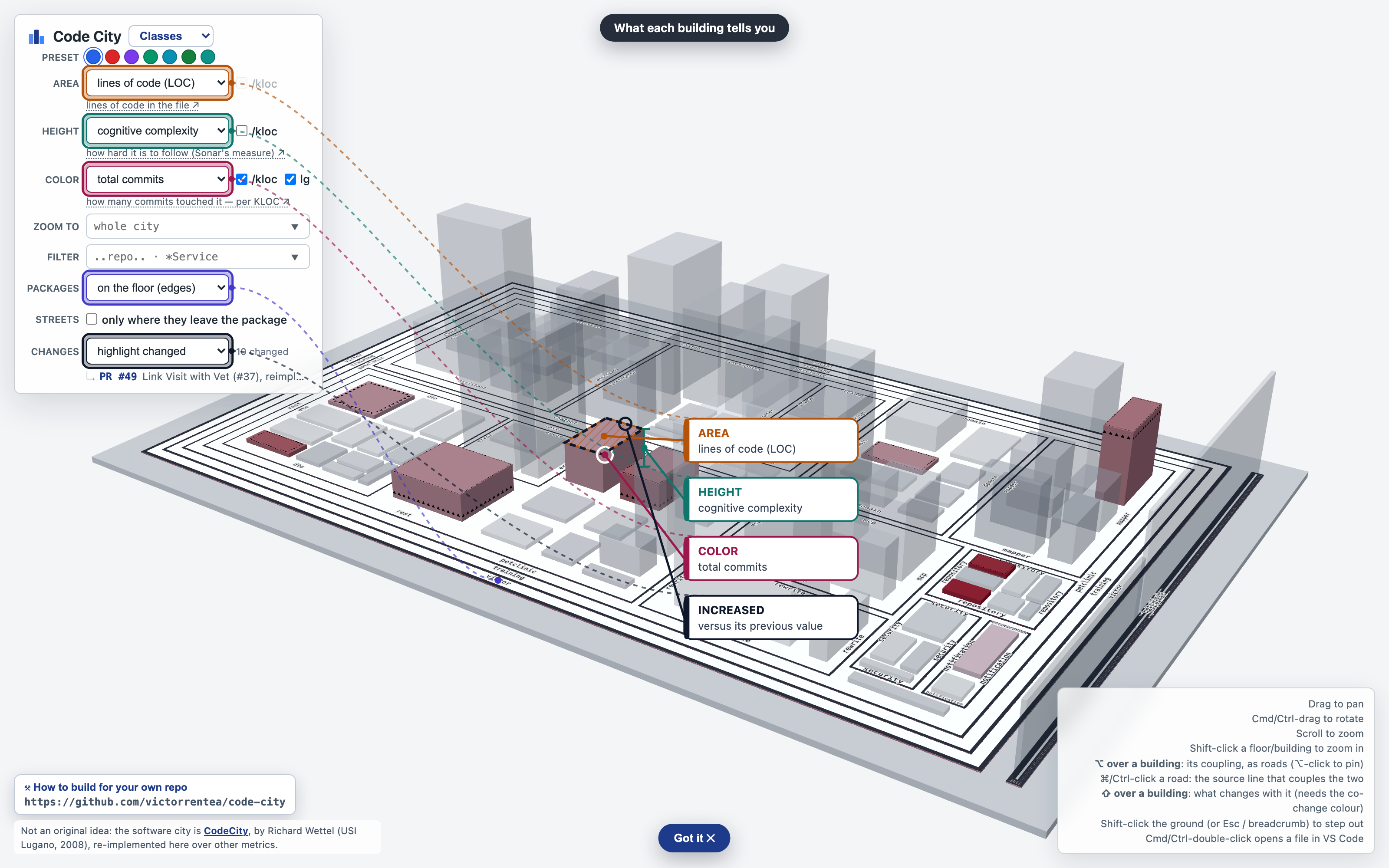
Code City
Code impact of this PR: size, complexity, coupling, …
UX
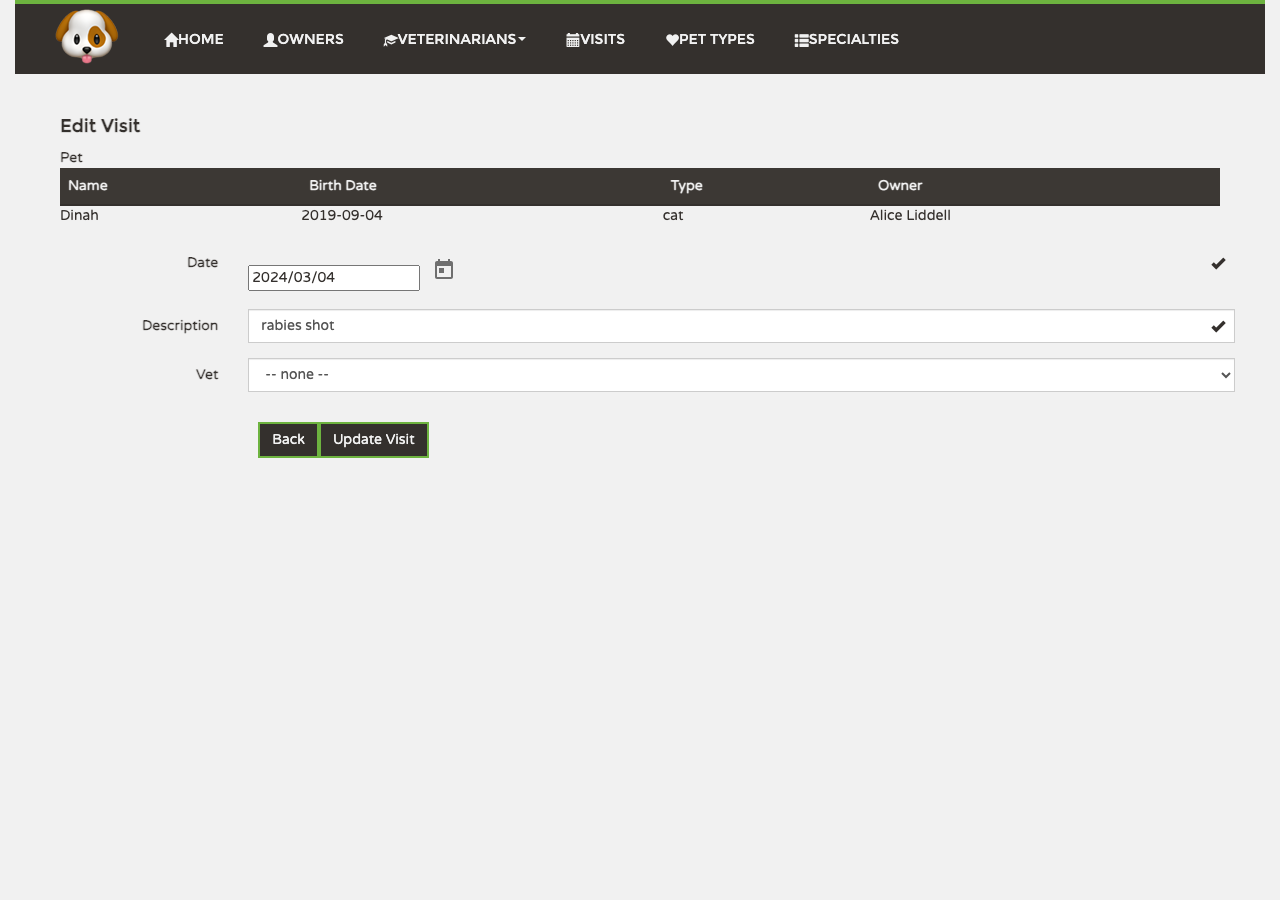
The audit is built around an absence: it reads which roles the design system covers off the components themselves, then looks for native controls filling one of those roles outside any DS host. Labelling what is already right proves nothing — the defect is the bare<select> somebody copied from an older template. Both builds are started by the run itself, this branch against the merge-base, and every screen in the catalogue is shot; only the ones whose DOM differs get a viewer.
1 gap · 1 regression · 5 of 19 screens changed · 4 components (+1 on this branch)
14 unchanged screens
Welcome, Owners, Add an owner, Edit an owner, Add a pet, Edit a pet, Pet types, Add a pet type, Edit a pet type, Specialties, Edit a specialty, Vets, Add a vet, Edit a vetroles the design system covers
data-ds="combo"coversselect— runtime:Add a pet:new: <select> inside app-combo[name="type"]
Book a visit
0 gaps · 1 component (+1 on this branch)
pictures and findings
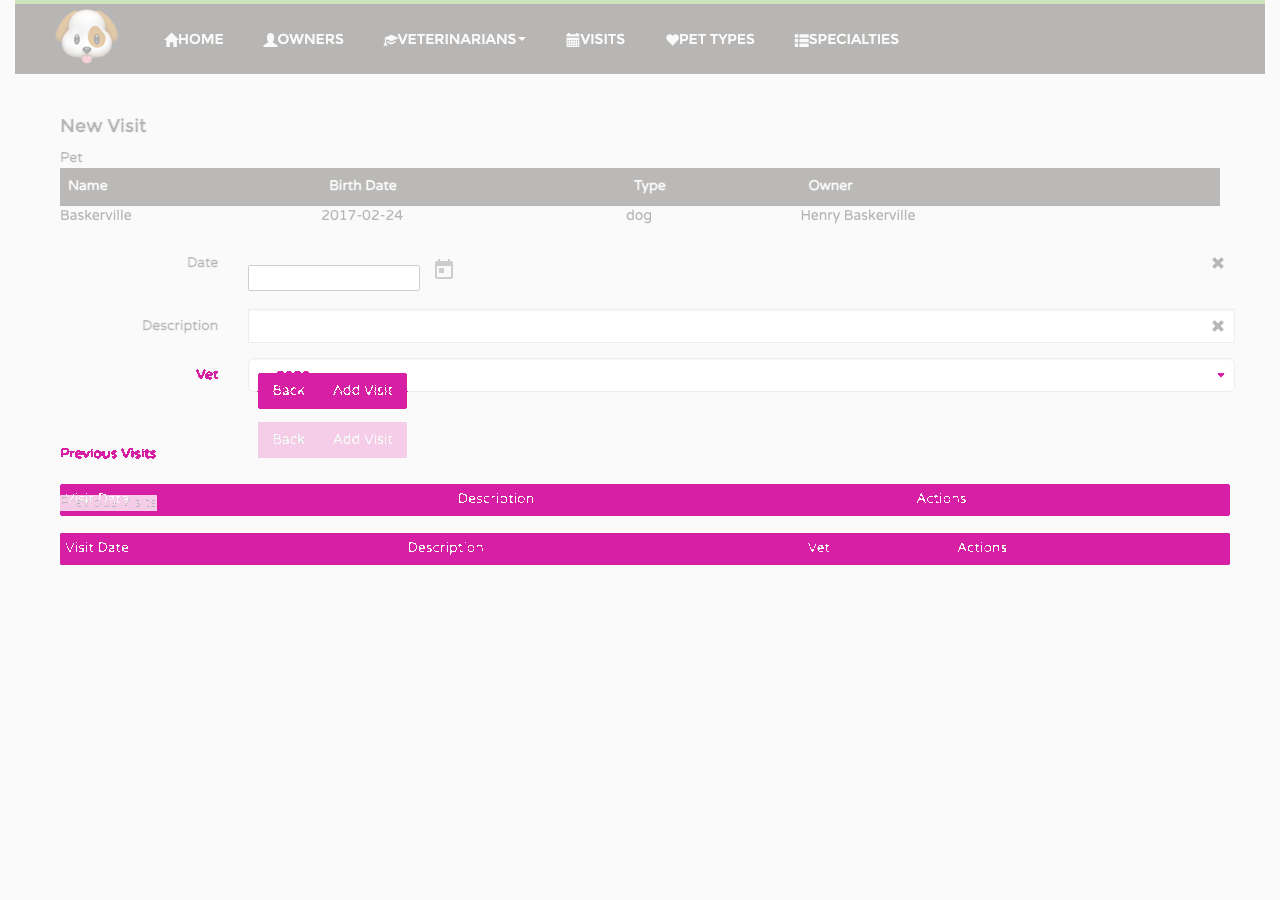
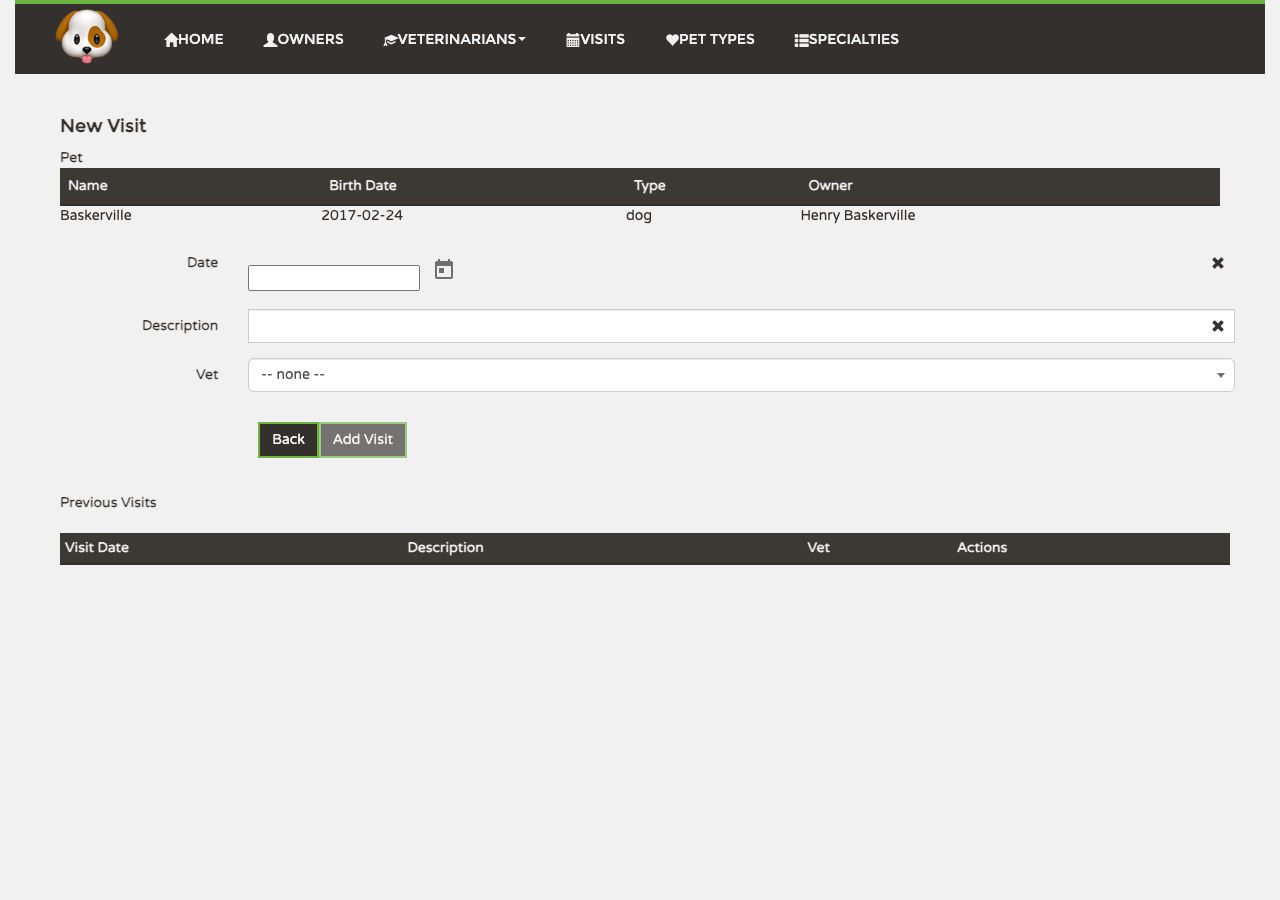
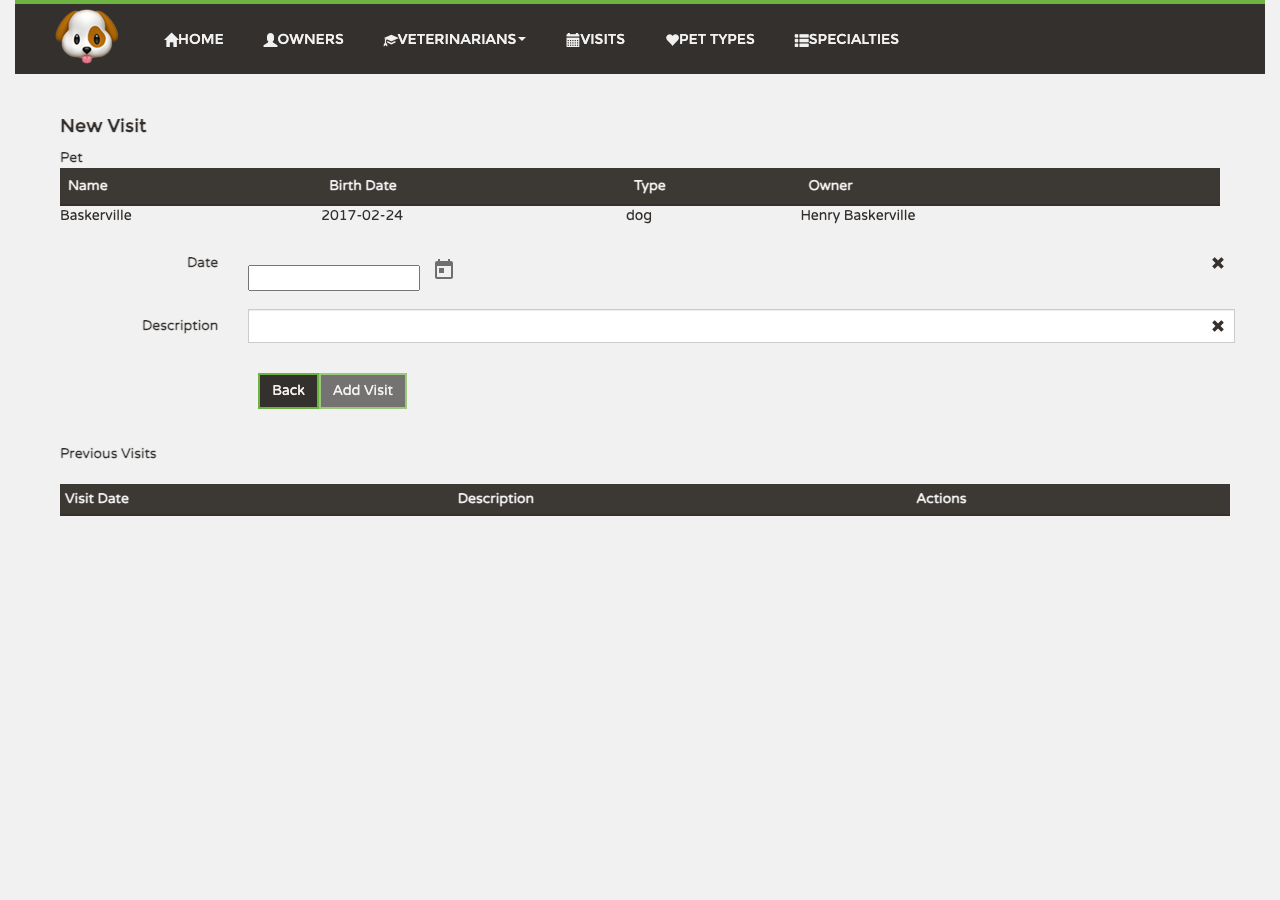
| side | element | role | why | delta | churn | |
|---|---|---|---|---|---|---|
| ok | test-pr | Vetapp-combo[name="vetId"] | design-system component combo | added | — |
2 controls considered and deliberately not judged
input[name="date"]Date — roleinput[type=text], not covered#descriptionDescription — roleinput[type=text], not covered
Edit a visit
1 gap · 0 components
pictures and findings
| side | element | role | why | delta | churn | |
|---|---|---|---|---|---|---|
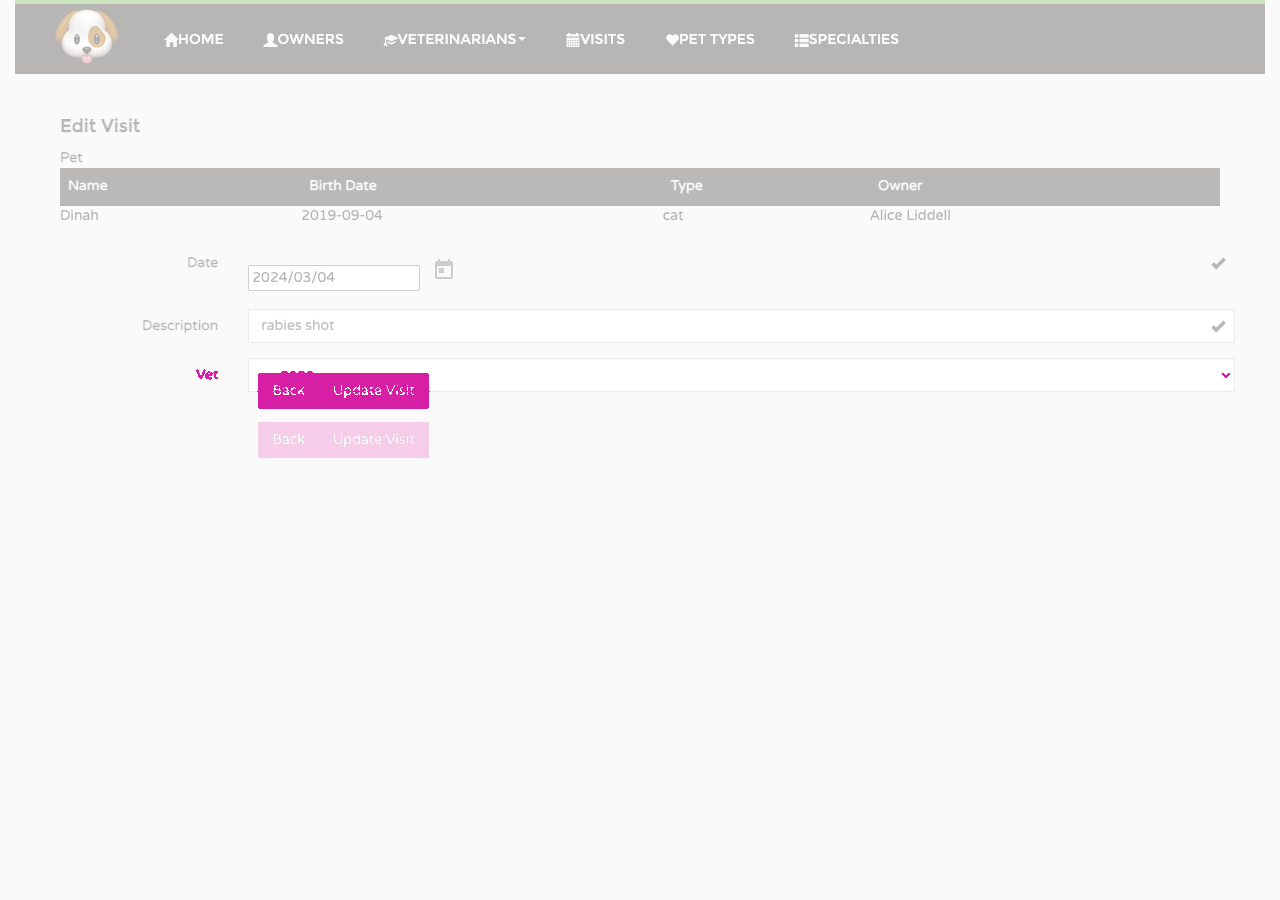
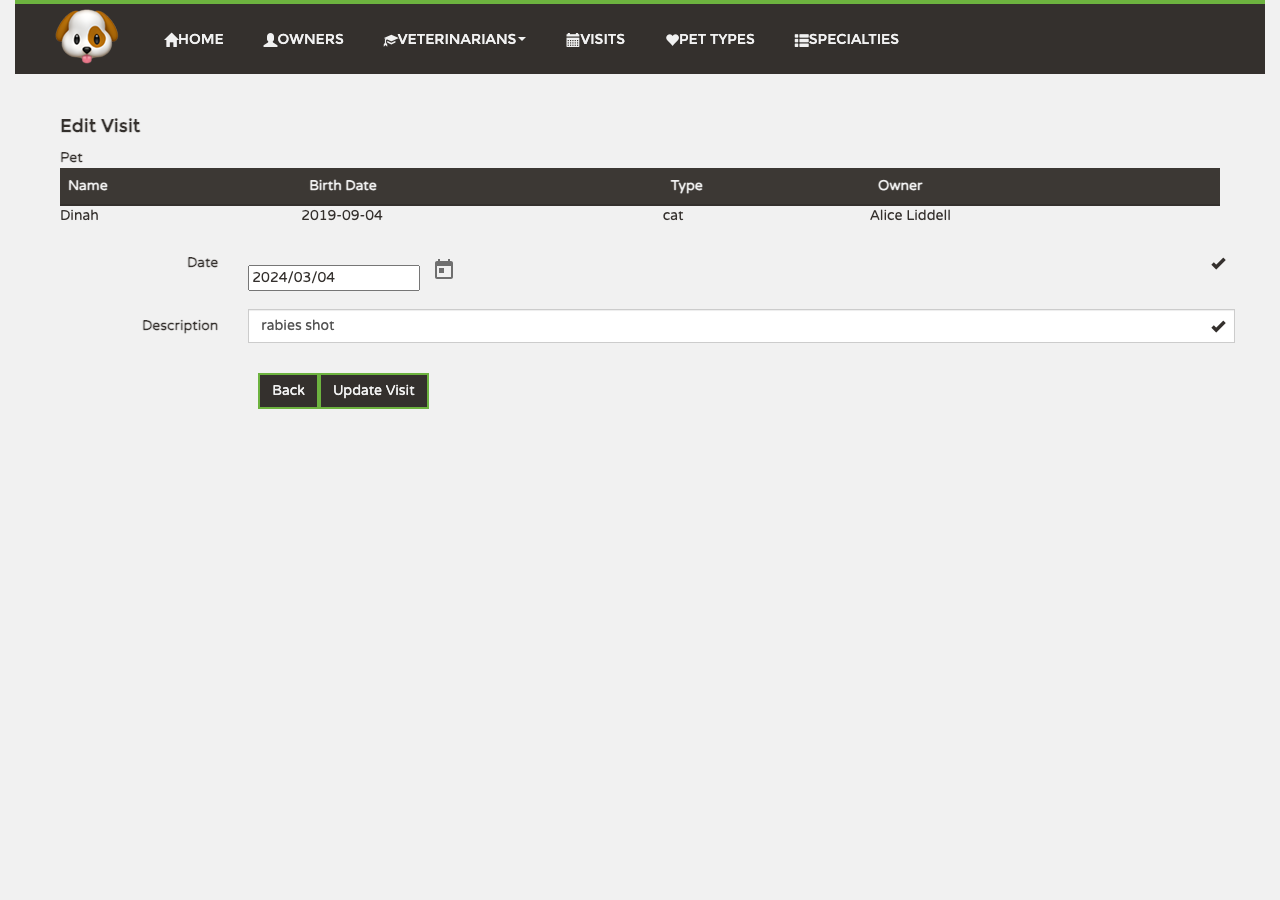
| gap | test-pr | Vet#vet | select | not the design-system component — a plain <select> where combo belongs. Nothing above it carries a [data-ds] marker, so the screen renders the browser’s own control instead of the one the design system shipsnew on this branch: it shipped bare, it was never migrated | added | — |
2 controls considered and deliberately not judged
input[name="date"]Date — roleinput[type=text], not covered#descriptionDescription — roleinput[type=text], not covered
Owner details
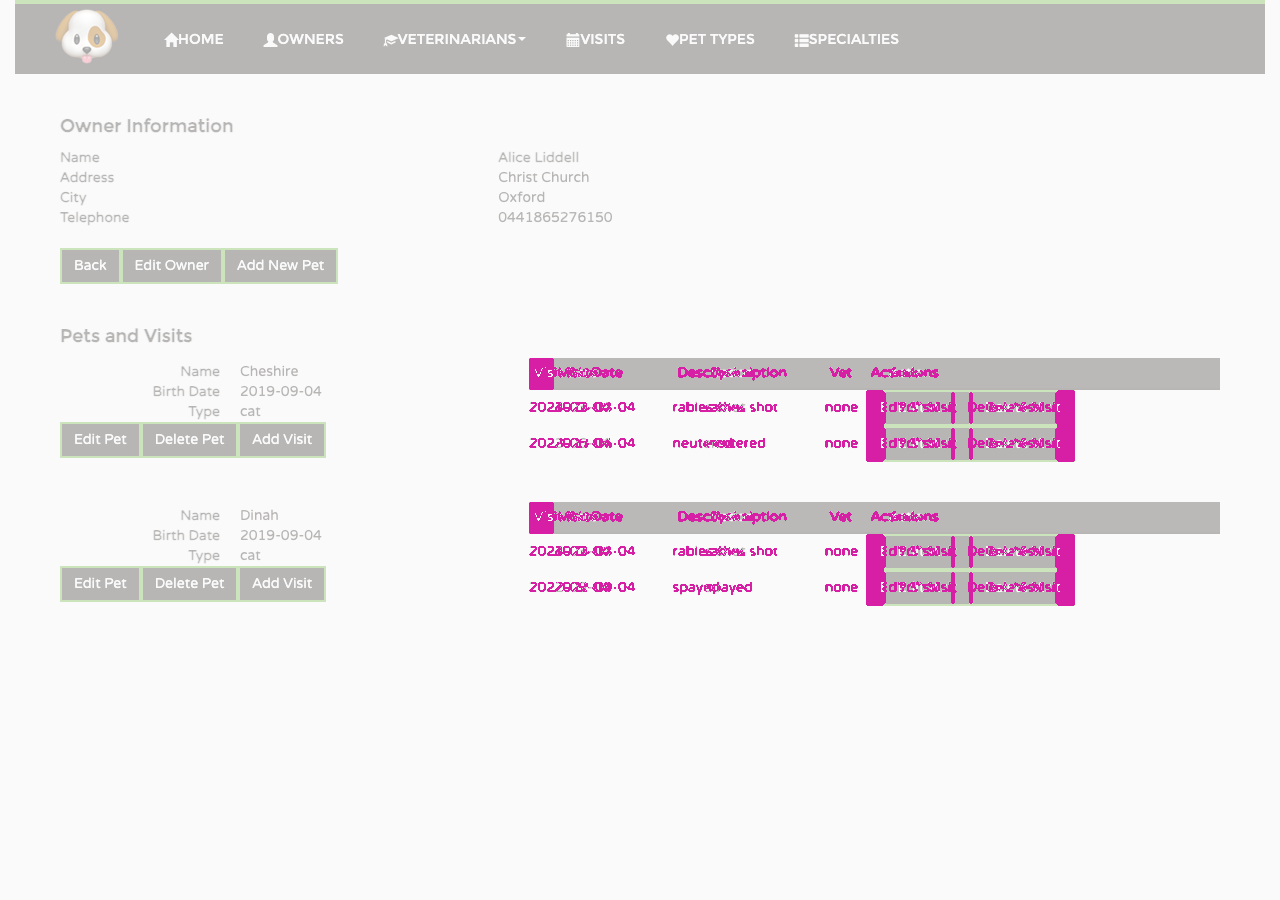
changed · 32 elements · no control the design system covers
pictures
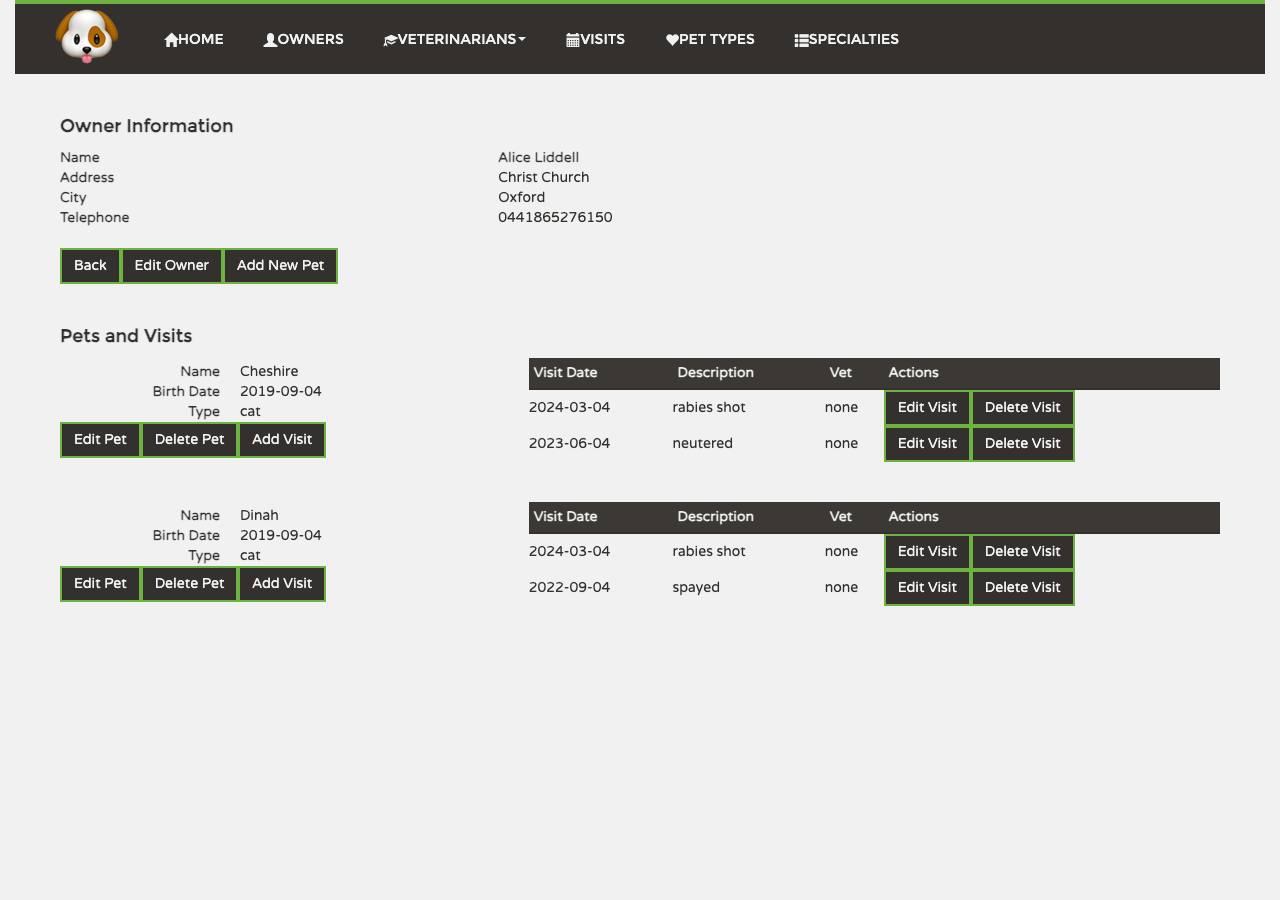
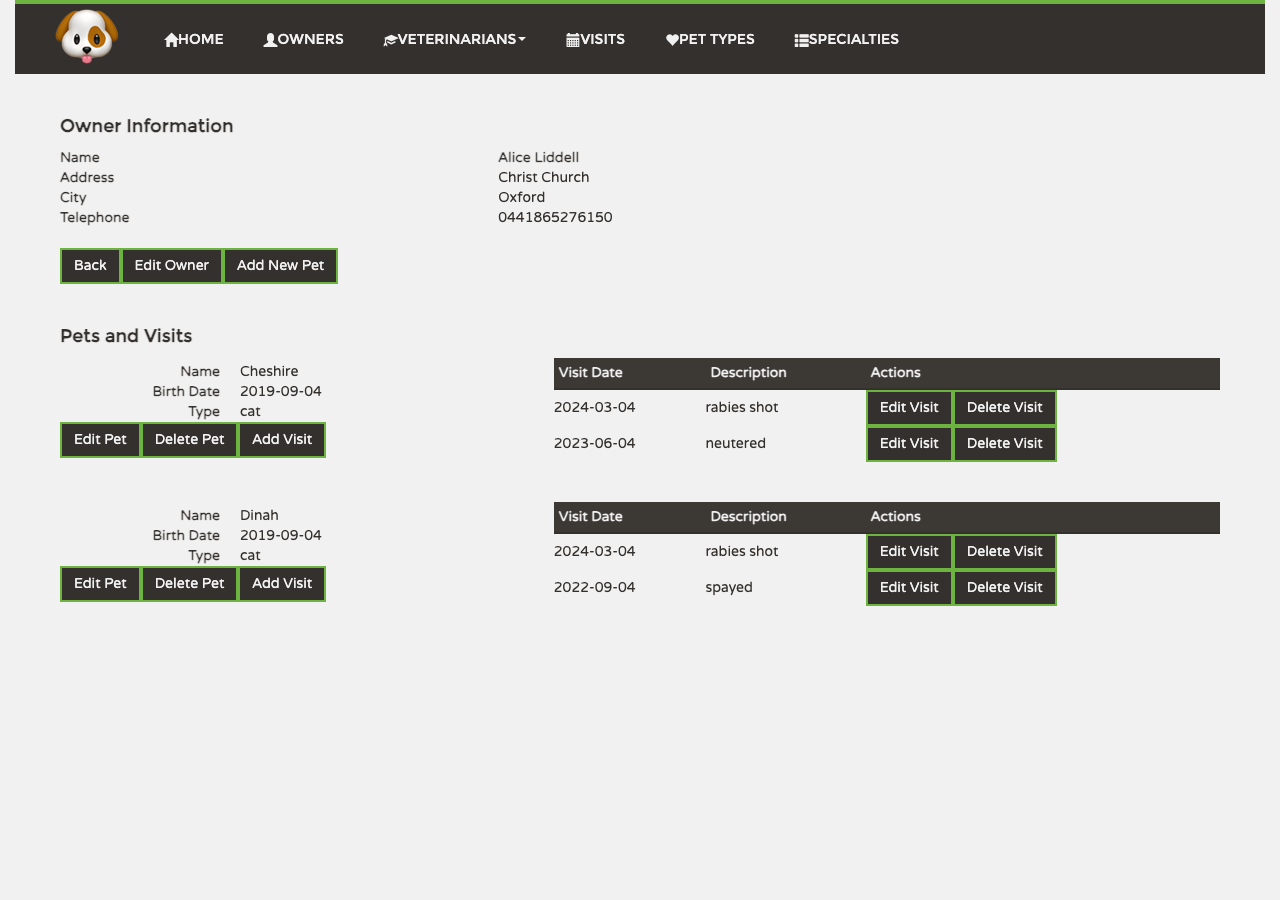
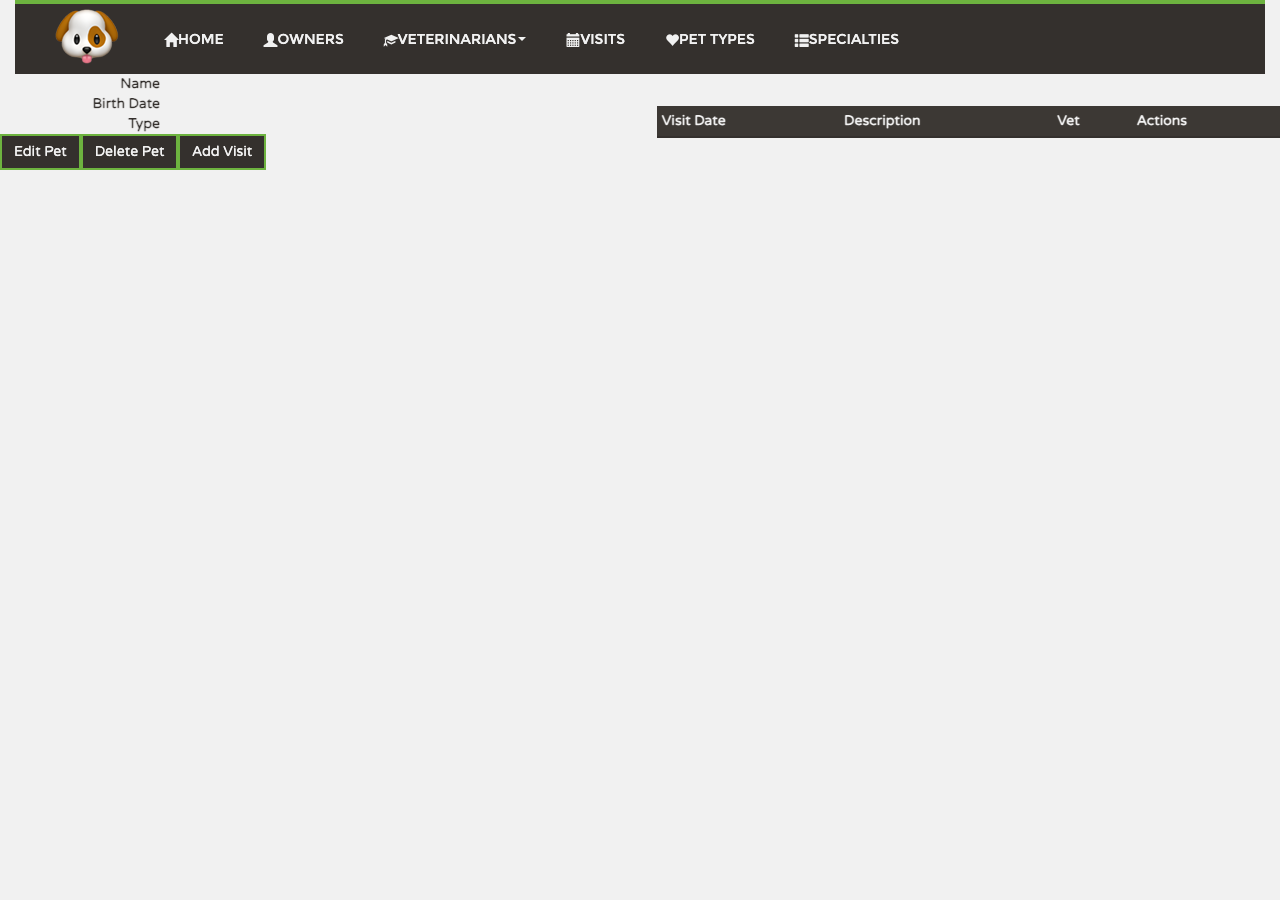
Pets
changed · 2 elements · no control the design system covers
pictures
Visits
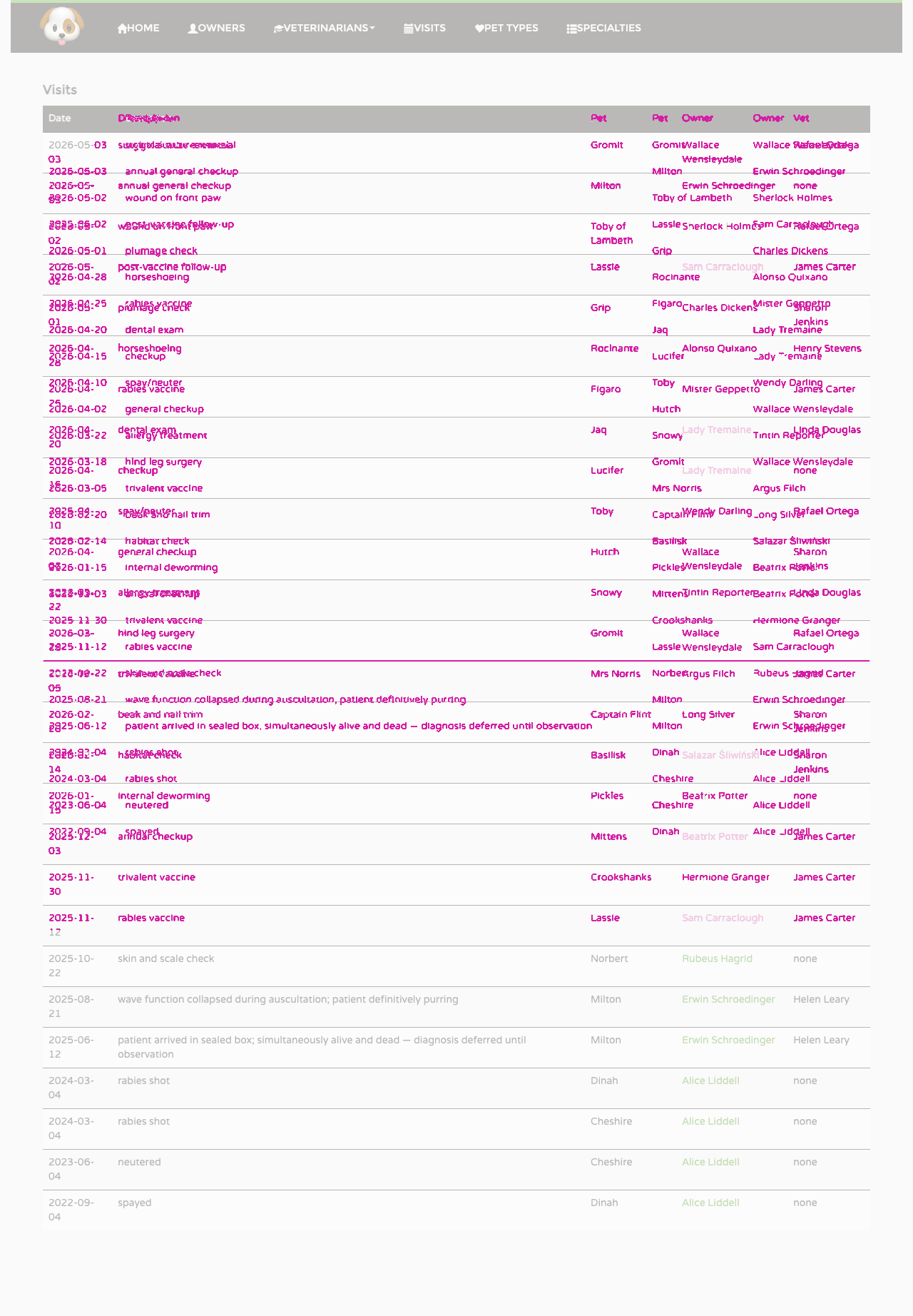
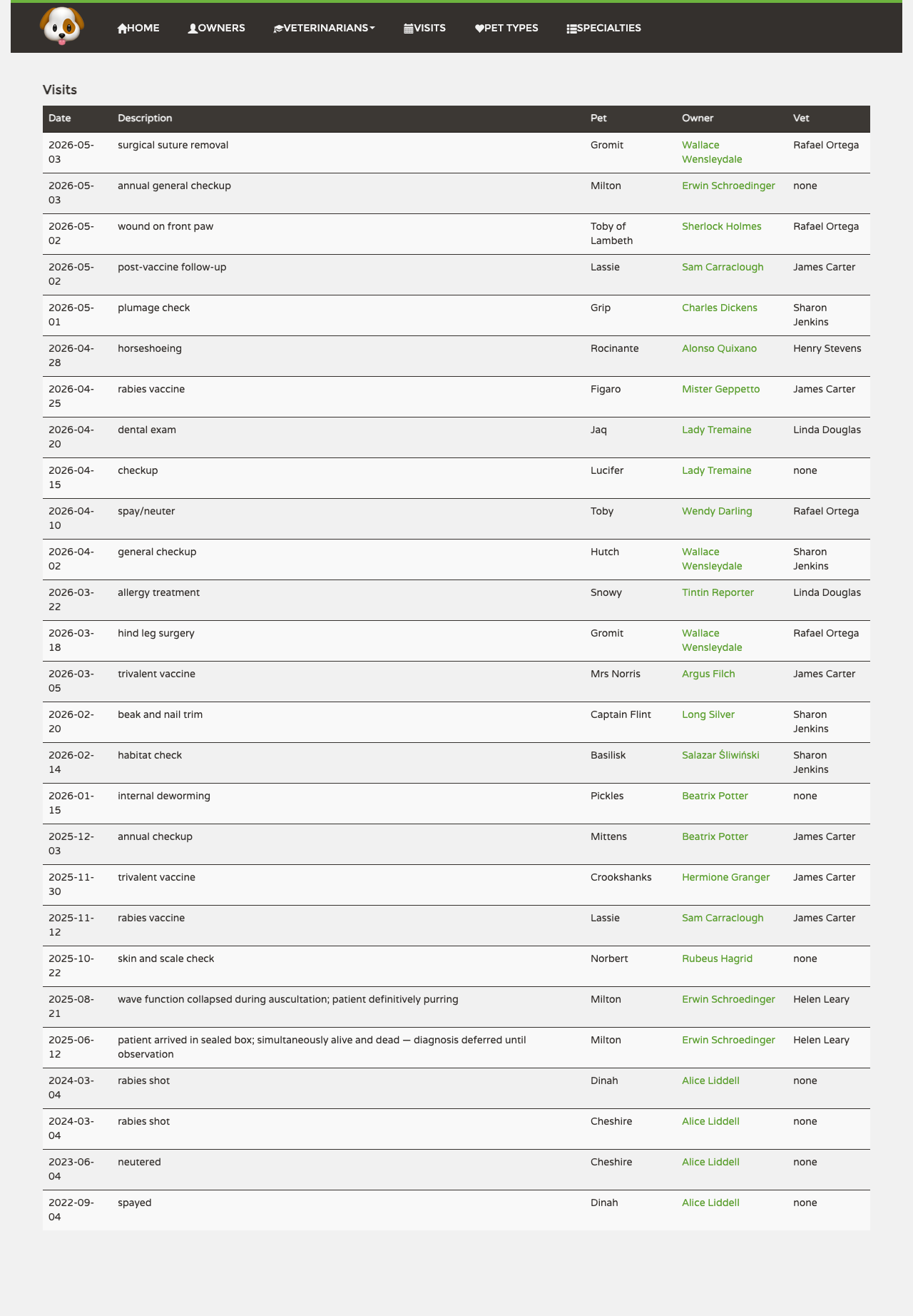
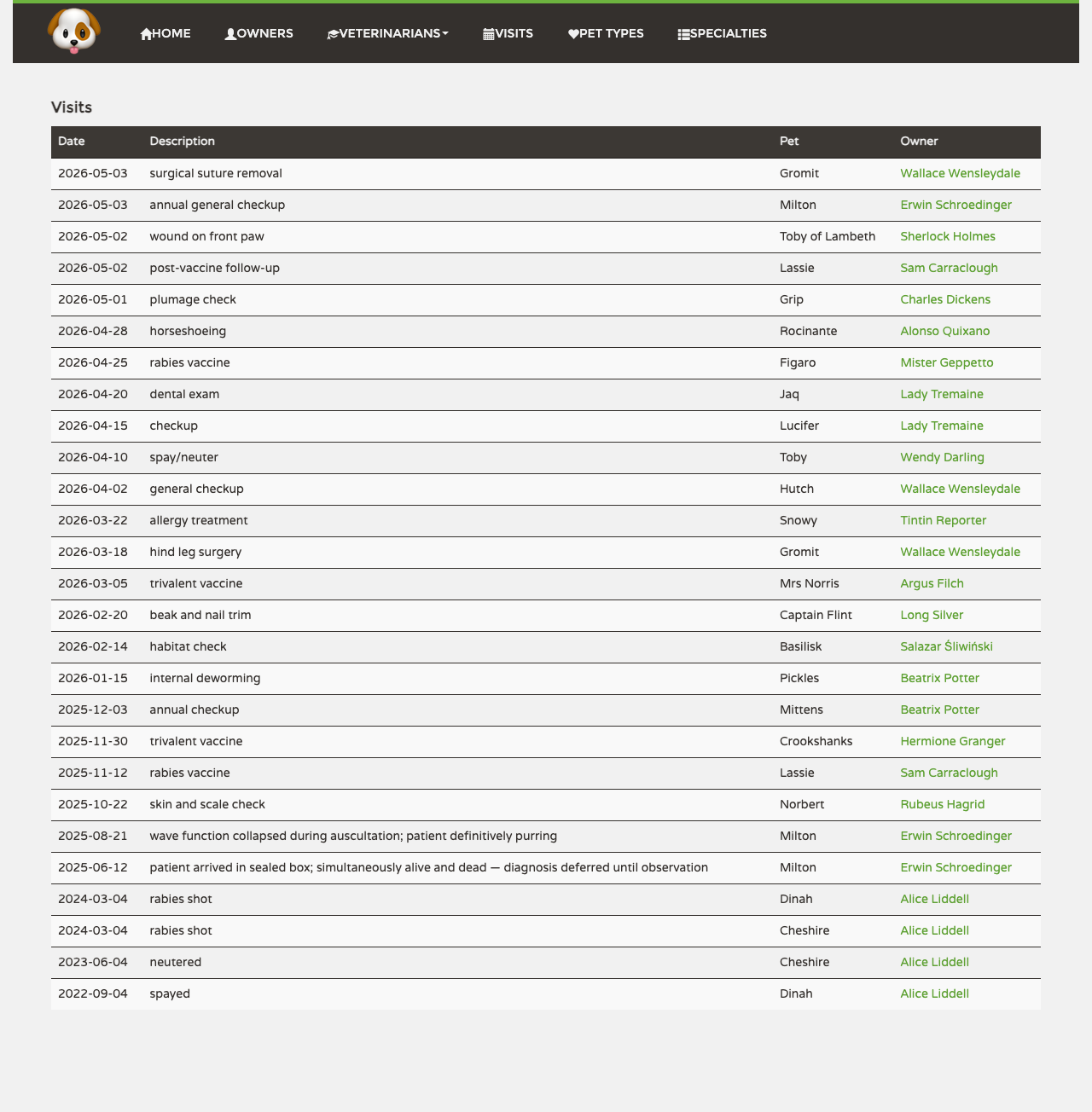
changed · 28 elements · no control the design system covers
pictures
Complexity
Cognitive complexity of the whole flow behind each entry point.
/Logging
Found structurally searching for common logging libraries.
 191private int bookVisit(int ownerId, int petId, VisitFieldsDto visitFieldsDto) {
 192    Visit visit = visitMapper.toVisit(visitFieldsDto);
 ⋯6 lines not shown
+199 log.info("Booked visit {} for pet {}", visit.getId(), petId);visit.getId()— auto-generated numeric visit database idpetId— numeric pet database id, method parameter
+196Vet vet = attendingVet(visitFieldsDto.getVetId());
 ⋯4 lines not shown
+201 log.debug("Attending vet: {}", vet.getLastName());- ❌
vet.getLastName()— the attending vet's surname, written to the log
🤖 AI Evaluation:
The code block is the evidence: alongside each statement it quotes the lines its logged values came from, walked back structurally by ast-grep and cut from the working tree with their real line numbers.
- ✅ SAFE — nothing traced reads as personal data
- 🤔 DOUBT — could not trace it with confidence, and an unresolved case is read as DOUBT on purpose rather than guessed SAFE
- ❌ PRIVACY — a value traced back to personal data, on its way to a log aggregator kept for months
- ⚠️ NOT EVALUATED — the model could not be reached; never silently read as SAFE
CODEOWNERS
Cost
| where it went | tokens | cost |
|---|---|---|
| phase by phase, from the first edit to this build | ||
| implementationfirst edit to the change set → commit #1 · 2 Sep 15:41 → 17 Sep 21:29 | 36.9MOpus 5 | $23.37 |
| code-review agents1 forked reviewer(s), whole transcripts · 17 Sep 18:30 → 17 Sep 18:34 | 6.8MOpus 5 | $5.99 |
| post-review fixeslast reviewer turn → commit #2, less the 1 turn(s) that wrote review-points.md · 17 Sep 18:34 → 17 Sep 21:39 | 12.7MOpus 5 | $7.45 |
| review-pointsfirst → last write of review-points.md · 17 Sep 18:39 → 17 Sep 18:39 | 342kOpus 5 | $0.28 |
| demo video — cost: not measured for this tab — no step in the ledger named it. | — | — |
| view imagesthe 'dsaudit' step of the page-building run | 12.2MOpus 5 88% / Sonnet 5 12% | $7.29 |
| page buildthe last full regeneration of this report (steps + build): refresh-report.py --steps static · 18 Sep 23:34 → 18 Sep 23:34 | 706kOpus 5 | $0.39 |
| not this report — other work in the pinned sessiongit (805), editing files from the shell (500), running tests (439), editing files (352); 69 file(s) written; including 75 earlier rebuilds of this page ($39.24) · not in the total | 1.2BOpus 5 74% / Sonnet 5 19% / Fable 5 7% | $688.29 |
| building this guide | ||
| 12 tabs with no model spend — Review, Demo, API, Data, Tests, Sequence, Structure, Code City, UX, Complexity, Logging, CODEOWNERS | 0 | $0.00 |
| not one tab's — assembling the guide itself, plus any step whose window did not cover it | 0 | $0.00 |
| totalimplementation + code-review + post-review fixes + review-points + model steps + the last full regeneration of this page | 69.7M | $44.77 |